Are Irrational Numbers Really Irrational?
The first news on “irrational numbers” came from ancient Greece / Southern Italy. They were sometimes “bad news”, if it is true that the Pythagorean mathematician who revealed this secret to “uninitiated people” was killed by his fellow religionists/mathematicians. These are numbers which cannot be expressed as fractions or ratios of two integer numbers like 1/2 = 0.5 or 1/3 = 0.333333… . Instead they appear in decimal notation as infinite and apparently random sequences of digits like √2 = 1.414213562373095… . Such infinite sequence of digits look like random and unpredictable. Indeed even the most powerful supercomputers cannot find all infinite digits. In this sense they may appear “irrational”, that is beyond human knowledge and “reason”.
However in recent centuries another notation for numbers has been invented: CONTINUED FRACTIONS. They express numbers not as infinite sequence of digits, but rather as infinite nested fractions or divisions of integers numbers. Remarkably, some irrational numbers which in decimal notation look like random and out of control, as continued fractions show high regularity and predictability.
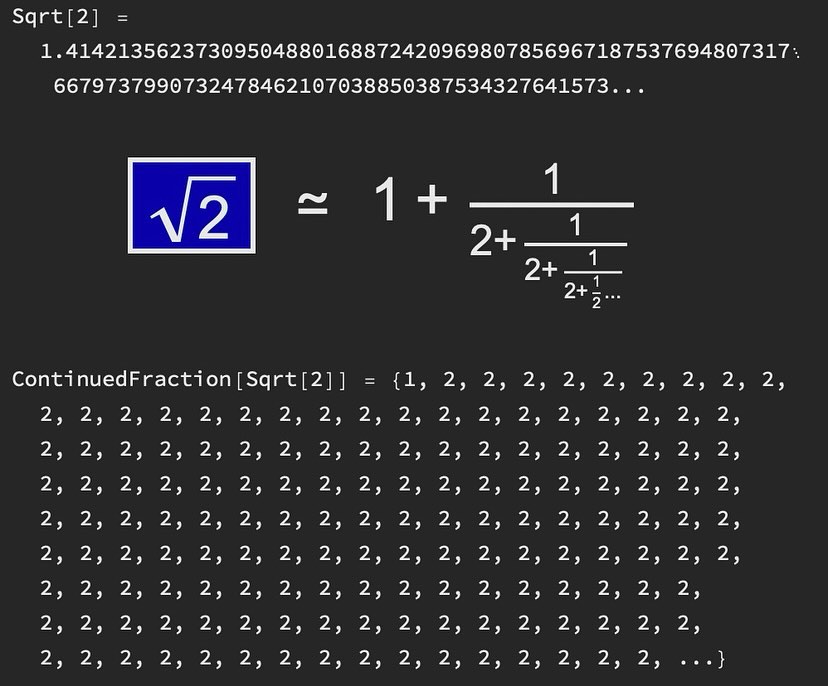
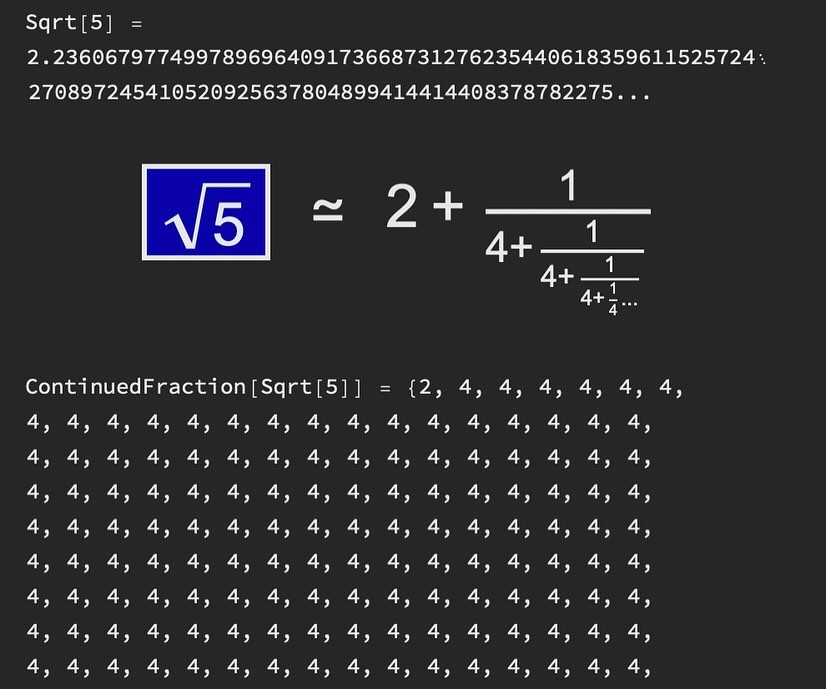
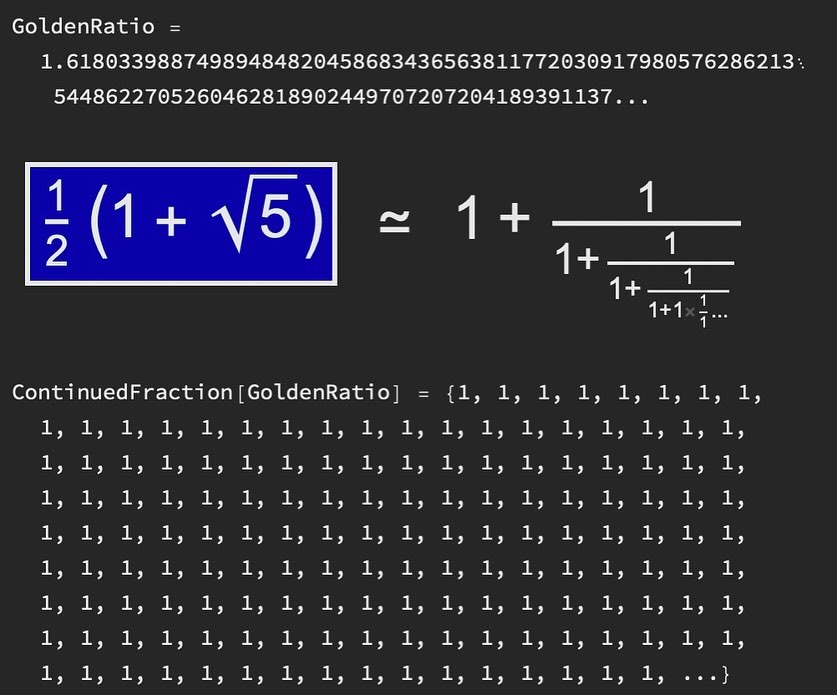
Notice this not necessarily true for all numbers, though.
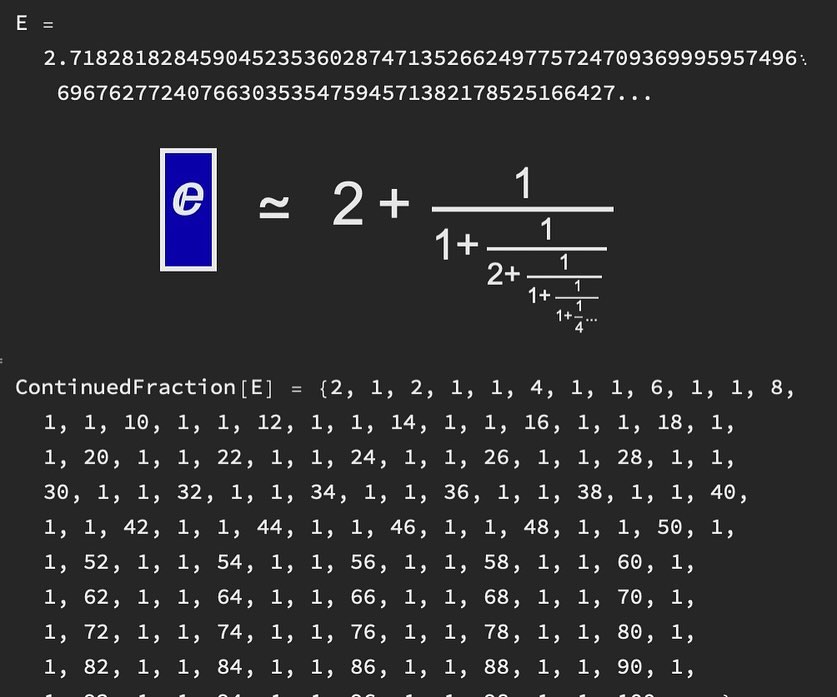
For example the very important number π (ratio between circumference and diameter) has no regular continued fraction representation.
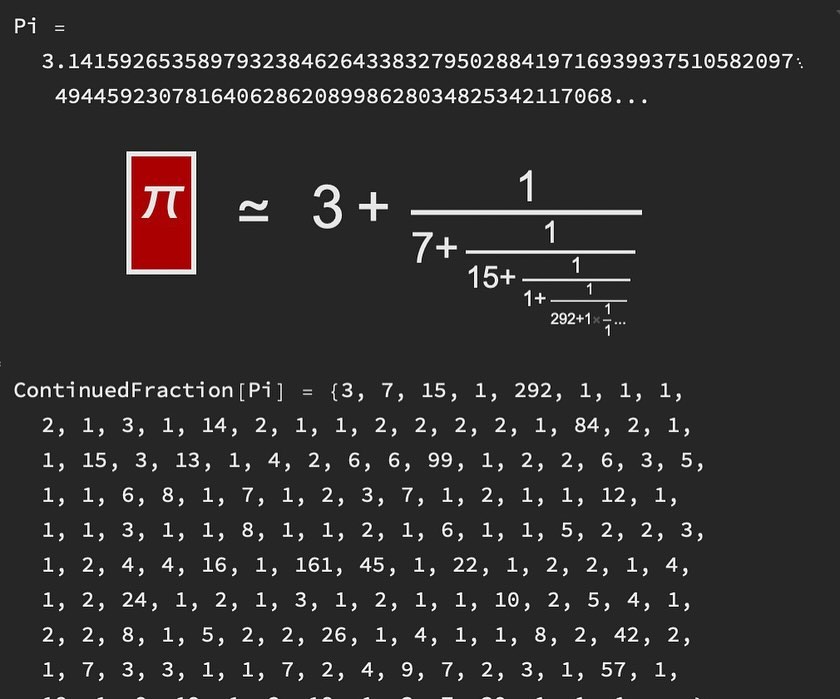
However even π can be represented in various ways as regular “generalised continued fractions”.
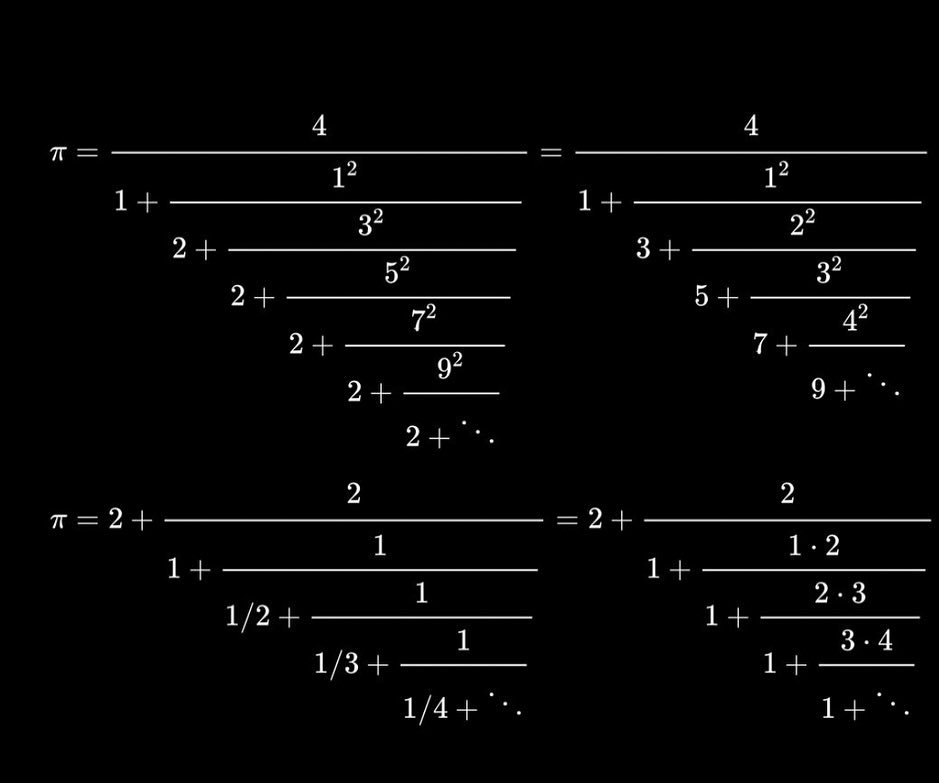
Once this has been discovered, I wonder whether it is still appropriate to use the name “irrational” for all such numbers. As science progresses it often happens that ancient names become obsolete or indeed “historical names”. Hopefully also some other fearful concepts and ideas originating in the past can become innocuous.