Mathematical Visions
After three years working on a paper, everything seemed correct and ready for publication. However, for the sake of completeness and “beauty”, a further numerical check was proposed. Then, all of a sudden, the core formulae of our work stopped working: apparently they could not withstand that further security check.
I got used to be pessimistic on mathematical physics papers. After leaving a Chinese camp (aka campus), I no longer care much about academic success and I could tolerate even a complete breakdown of our theory.
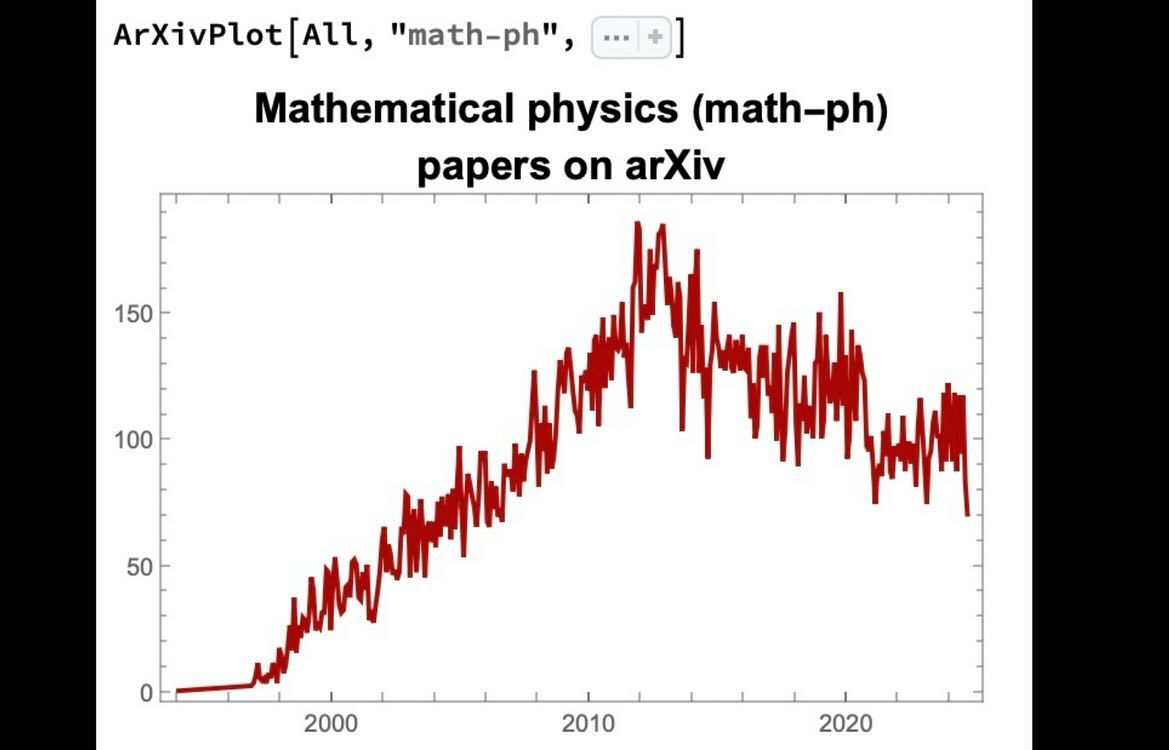
It actually seemed reasonable and I tried to convince of that my collaborators. I devised a general argument, so that also senior professors, who cannot deal with programming details, could understand and debate.
The argument was essentially as follows. Everything in a certain supersymmetric theory is derived from some differential equations. The theory has two instances: with two massive particles or zero particles. Crucially, the differential equation for the two particles reduces to the one for zero particles, for zero mass parameters.
Actually, only the “form” is the same, that is in the former case the potential term is Cosh(2x) while in the latter Cosh(x). “Intuitively”, a mere factor 2 is not expected to change anything dramatically, but just rescale everything naturally and harmoniously, right?
However, the underlying particle theory looked completely different. Not only all the numbers changed dramatically, but also the form of the functions could not match at all.
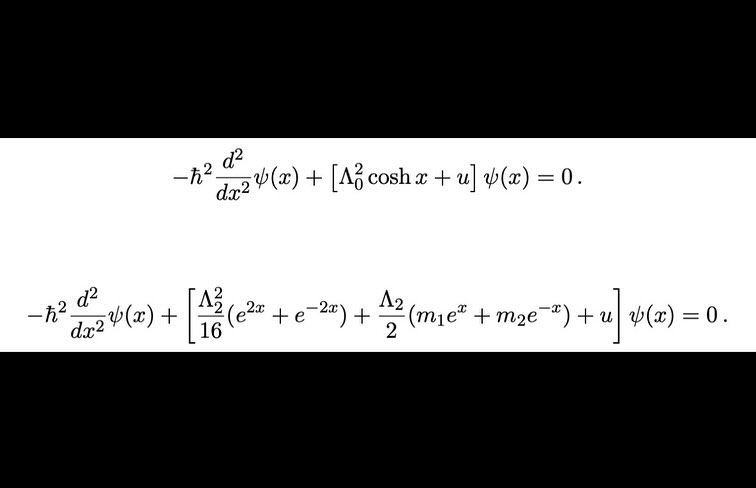
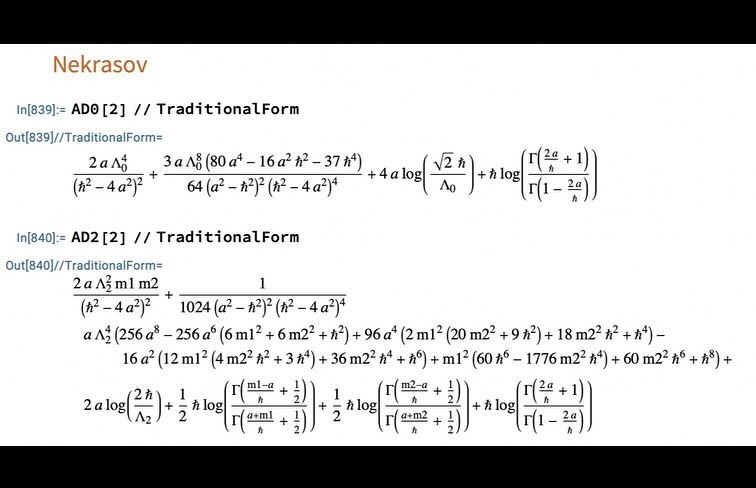
So I proposed this as a “theoretical explanation” of why our numerical test failed: there could not be any match between these different mathematical functions and the theory had no basis.
However, this was not just our theory, but the several decades old of the great Seiberg, Witten, Nekrasov and Shatashvili. Indeed, fortunately my argument was wrong: more careful numerics confirmed our formulae.
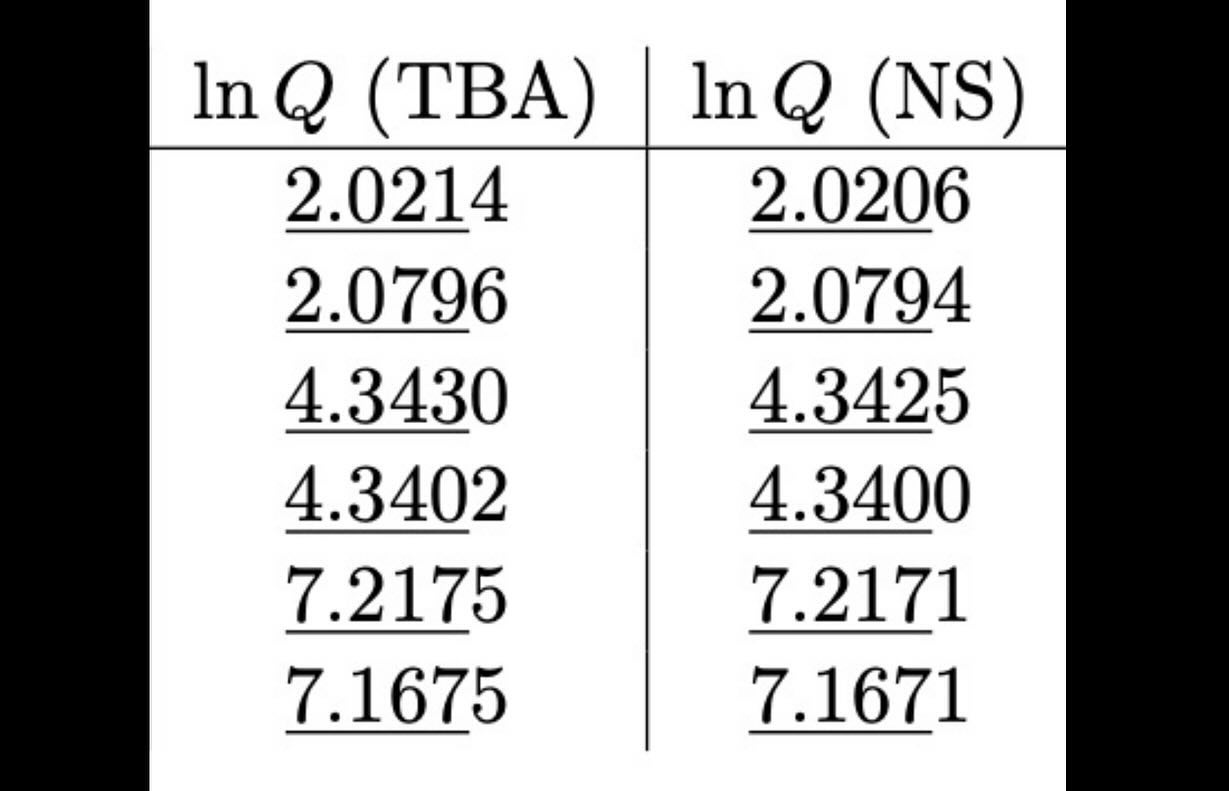
Still, the very fact that a “naturalness” argument as the above can be misleading fascinates me: it shows the intricacy, complexity and depth of mathematics, by which harmony is the necessary flip side of chaos!